

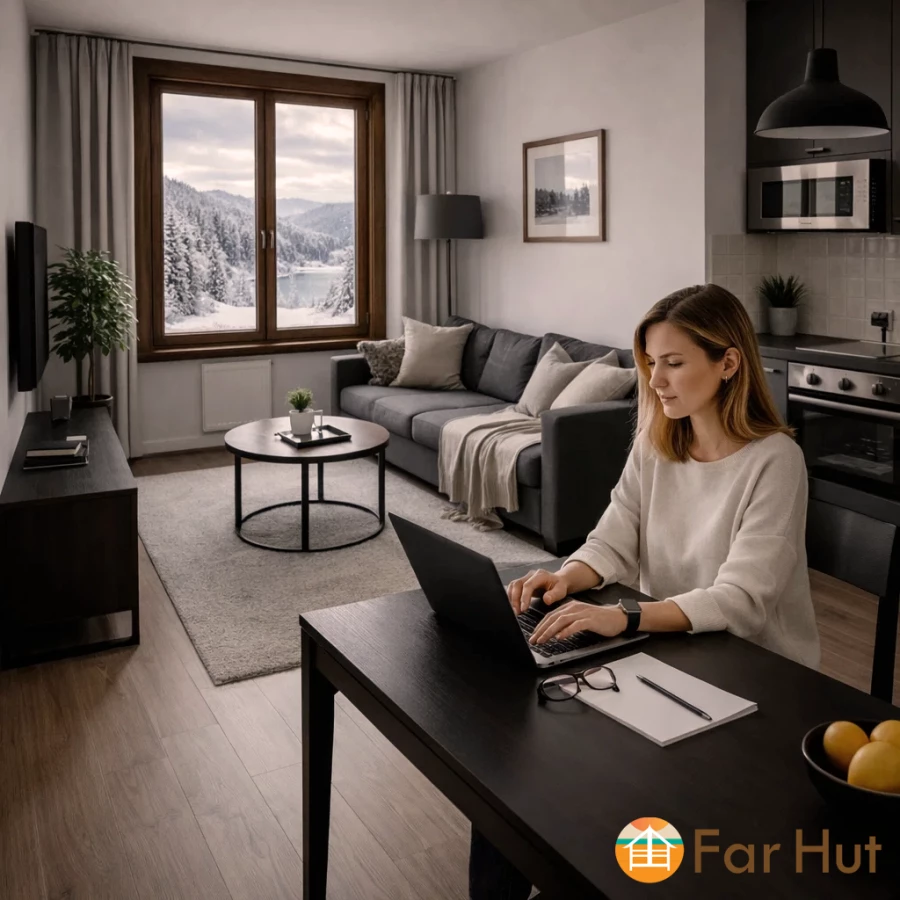
When Basics Are No Longer Optional in Short-Term Rentals
Happy New Year! As 2026 begins, it is a natural moment to reflect on how travel habits continue to evolve. In the short-term rental market, guest expectations have become clearer, more consistent, and less forgiving than in previous years.
Short-term rentals have entered a more settled and mature phase of their development. What began as an alternative to traditional accommodation has become a mainstream option for a wide range of travelers, from families and leisure tourists to remote workers and long-stay guests. By 2026, most travelers approach short-term rentals with confidence and familiarity rather than curiosity. This familiarity has shaped a clearer set of expectations and, just as noticeably, a lower tolerance for issues that were once overlooked or excused as part of the experience.
For many guests, the basics are now assumed rather than requested. Reliable internet, smooth access to the property, accurate arrival instructions, and responsive communication are seen as fundamental parts of a stay. Travelers rarely praise these elements when they work well, but their absence often defines the entire experience. When access codes fail, messages go unanswered, or connectivity is unstable, guests tend to see the problem as poor management rather than bad luck or local conditions.
Cleanliness has become one of the strongest signals of quality. Guests often form an opinion within minutes of arrival, paying close attention to bathrooms, kitchens, linens, and overall presentation. Even small issues can shape the perception of the entire stay. Airbnb itself has acknowledged that cleanliness is one of the most common reasons guests leave less-than-perfect reviews, reinforcing how little room there is for error in this area.
Accuracy and transparency in listings have also become far more important. Travelers are less forgiving of descriptions that exaggerate space, hide limitations, or rely on carefully framed photos. This is especially true when it comes to pricing. An analysis by NerdWallet found that cleaning fees alone can make up around 25% of the total cost of a stay, and in some cases were even higher than the nightly rate. These surprises often lead to frustration, particularly when guests only discover the true cost at checkout.
High cleaning fees also influence guest behavior in ways hosts do not always expect. Airbnb has warned that when fees are set too high, guests may feel less responsible for leaving the property in good condition, assuming that the fee covers everything. This dynamic can lead to tension, poor reviews, or mismatched expectations on both sides.
What stands out most in 2026 is not a growing demand for luxury, but a reduced tolerance for friction. Guests are increasingly unwilling to deal with long lists of rules, complicated check-out procedures, or restrictions that make a stay feel stressful. When house rules feel excessive or controlling, travelers often interpret them as a lack of trust. In a market where choice is abundant, many guests simply move on to listings that appear easier and more straightforward.
There are also clear examples of what travelers consider unacceptable. Rental scams remain a serious issue, particularly outside major platforms. The U.S. Federal Trade Commission has warned that scammers often create listings for properties that do not exist or are not actually for rent, then pressure travelers to pay using wire transfers, gift cards, or cryptocurrency. These cases represent the extreme end of “bad,” but they contribute to a broader sense of caution among travelers and increase expectations for transparency and platform protection.
Expectations differ depending on the type of traveler, and these differences are now more clearly defined. Families tend to prioritize safety, usable space, and practical amenities that support longer stays. Remote workers and digital nomads focus heavily on internet quality, quiet environments, and functional layouts. Short urban trips often emphasize location and convenience, while longer stays bring attention to storage, maintenance responsiveness, and overall livability. Guests increasingly compare rentals within these specific categories rather than across the entire market.
Technology has played a major role in shaping modern expectations. Self check-in systems, automated messaging, and digital house guides have made stays easier when they work properly. At the same time, they have raised expectations around speed and reliability. Guests accustomed to instant confirmations and quick replies are far less patient when systems fail or when problems are not resolved promptly. Convenience is no longer seen as a bonus, but as a standard.
Platform standardization has further narrowed tolerance for poor experiences. Similar booking interfaces, review systems, and cancellation policies make it easier for travelers to compare stays across cities and countries. As a result, a rental in a smaller or less established destination is often judged against experiences in major travel hubs. This has created a more uniform global baseline for what is considered acceptable.
Perceptions of value have shifted alongside these changes. While price still matters, travelers increasingly associate value with predictability and ease. Many are willing to pay slightly more for a stay that feels professionally managed and free of surprises. Lower prices no longer excuse unclear communication, outdated interiors, or extra effort from the guest. In some cases, unusually cheap listings are treated with suspicion rather than enthusiasm.
For hosts and property managers, these expectations translate into clear outcomes. Properties that consistently meet basic standards tend to receive stronger reviews, higher repeat booking rates, and more stable occupancy. Those that rely mainly on location, charm, or pricing face growing pressure as competition increases and guest patience declines.
All of this points to a basic change in how short-term rentals are judged. The best stays are often the ones that do not draw attention to themselves. When things work as expected, guests focus on their trip rather than the property. For travelers, this makes booking feel easier and more predictable. For hosts, it sets clearer expectations about what matters most. As the market continues to develop, properties that are easy to use, honest in their listings, and consistent in delivery are more likely to perform well over time.
FarHut